Showing posts with label Bishop Holliman. Show all posts

Thursday, April 30, 2026

 A Personal Remembrance of Nancy Carol Cornelius Morton (1945-2024) by Glenn N. Holliman

The Loss of a Cousin

Growing up in the 1950s and 60s in Alabama, we knew the elder daughter of Walter F. (1922 -2007) and Virgina Holliman Cornelius  (1922-2011) by her full name, Nancy Carol.  Later in adulthood, we knew her as only Carol, a gregarious, attractive lady, who at family reunions greeted relatives with a sunshine smile and was quick to ask how you and others were doing. I would describe her personality as 'sparkling', lighting up a room by her presence.

Carol grew up in Birmingham, Alabama, attended Shades Valley High School and later the University of Alabama.  Her first home was in nearby Shelby, where her grandparents ran a country store.

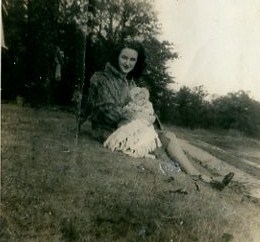
Right, Virginia and Walter in 1945.

In the 1950 census, her father is recorded as the manager of the store.  Ambitious, Walter, a World War II veteran, earned a law degree in 1953 and lawyering became his career.  Her mother, Virginia, my father's youngest sister, after giving birth in 1949 to a second daughter, Susan, became a teller in a bank, and made banking a career, breaking many class ceilings rising to a vice president of one of Alabama's major financial institutions.

Below, the Cornelius family in 1959
Carol, herself became a nurse and married Carl A. Blomstran in 1966. Settled in Texas,  the marriage brought forth a daughter Carla Ann and a son, Eric Walter Blomstran.  Tragically, Eric died in 2002 in an automobile wreck. In a second marriage, Carol gave birth to another son, Richard Bruce Kilian. He too died prematurely in 2014 on an airplane flight.


                                               Right, Carol and Chuck in the 1990s

It is said three is a charm, and so it was for Carol in 1993 when she became the wife of a Navy veteran, Charles (Chuck) E. Morton.  A deep-sea explorer for the Navy, a leg injury forced an early retirement from the service.  Chuck, a kindly, caring man of faith, became her caregiver in the 2010s when Carol developed the same illness that took her mother, Alzheimer's.  Chuck, having relocated to Mexico for supporting assistance, stood by her for years until she slipped away in October 2024.  

Before growing ill in the 2010s, Carol, Chuck and I visited, once in their home in San Antonio, again at my sister Becky's home in Tennessee and finally for the last time in 2014 when they stayed with my wife, Barb, and me in Pennsylvania.  During these visits, Carol shared her memories of growing up during the Civil Rights era in Birmingham, Alabama (where we both were born, she in 1945, me in 1946). Both our fathers were WWII veterans and both completed college and advance degrees thanks to the GI Bill.

In 2012, Carol and Bishop Holliman holding a photograph of Bishop's great grandmother, Mary (Polly) Holliman

Looking back, Carol told me of the difficult marriage of her parents, eventually resulting in a divorce. She described how insulated she had been of the history that was occurring in Birmingham during her teens. She like me had attended racially exclusive schools and churches as we both came of age in a deeply segregated society. We marveled at how America had changed for the better, a more open inclusive country.  She shared with me her growing faith which had supported her when she lost her two sons. Both in our 60s at the time of these conversations, I was touched and enriched by her memories and reflections on her life's journey.  

She is gone now, at peace after a long, lingering illness, escorted and blessed in her final days by a very caring husband. He now lives in Colorado with a relative. If ever there was a saint, his name is Chuck.  - GNH


Tuesday, January 19, 2021

From My Sister's Attic, Part 2

 by Glenn N. Holliman

Letters from the Past

Recently my sister Becky Holliman Payne forwarded a box of letters, pictures and memorabilia saved by our late mother, Geraldine Stansbery Holliman Feick (1923-2015).  While I have a computer folder of letters from our Holliman grandmother, Pearl Elmer Caine Holliman (1887-1955), I found four not seen before.  Written between December 1944 and May 1945, they capture the feelings of a mother (Pearl) whose family has been in rapid transition since her third born son, Bishop (1919-2018), shipped off to the Navy in November 1941, a few weeks before Pearl Harbor.

There would be three war time marriages from her seven children - Virginia and Walter Cornelius (1942), Ralph and Motie Chism (1943) and Bishop and Gerry (1945).  

Between 1942 and 1945 additional grandchildren for Ulyss and Pearl joined the family, They were John Ferrell (1942), Patti Holliman (1942), Anne (1942) and Jean Holliman (1944), Robert W. Daly, Jr. (1943) and Carol Cornelius (1945). These offspring joined five earlier grandchildren, Mary Daly (1931), Charles H. Ferrell (1936), Carolyn Ferrell (1938) and Jerry and Terry Holliman (1940).  

Pearl did her best with letters to keep up with this expanding flock.  The one examined below and others in next posts welcomed my mother into the growing family.  The warmth, care and worries of a mother and grandmother come through to us again, more than 75 years after they were penned.


Ulyss S. (1884-1965) and Pearl Caine Holliman (1887-1955), Christmas 1946 at their home at 2300 3rd Avenue North, Irondale, Alabama.


Bishop and Melton Holliman, 1942.  Bishop Holliman,  a young seaman,  and Melton age 34, the year before he was drafted into the Army.
Page 1, December 3, 1944, Pearl Holliman to Geraldine Stanberry, fiancĂ©e of Bishop Holliman.

This letter contains additional information on my Uncle Melton Holliman's (1908-1958) sudden evacuation in November 1944 from a medical unit near Metz, France to England.  After finishing 17 weeks of training at Camp Barkeley, Texas in February 1944, it took until September 1944 before he reached his assignment with General George Patton's 3rd Army.  After only two months of duty as a medic, his health broke down. He left England and arrived at an Army hospital on Long Island, NY shortly after Christmas.  His wife Ida and daughter Patti joined him.  Later he transferred to light hospital duty in Jackson, Mississippi and returned to civilian life, a pharmaceutical salesman in the summer of 1945. 

Ralph Holliman (1924-2017) served as a clerk in the US Army Air Corp stationed first in England in late 1943 and later in France by the late summer of 1944 at a transport base near Paris.

Above Ralph and Motie (1925 - 2003)
Page 2 above contains information on Virginia (1922-2011), Loudelle Holliman Ferrell (1914-1998) and Robert W. Daly, Sr. (1903-1959).

 "Come one of these days all the boys will be home and we will be one big happy family again." 
- Pearl Caine Holliman, 1944


Sunday, December 20, 2020

Christmas Past - The WWII Generation at Christmas

 by Glenn N. Holliman

Christmas 2020, a Reflection on 70 Years Past

I have posted the below photographs in previous years, but as this Christmas season is a very different one for many of us, I feel moved to share for the younger folks reading this what a Christmas past was like for my generation.  Extended families will be separated due to the Covid-19 virus, an unexpected and deadly visitor to the Year 2020. 

So as my late father often did, I step back in time and through old photographs rekindle  warm feelings when families could gather and celebrate the rituals that sustain us as human beings.

Below is one of the last pictures of the complete family of Ulyss and Pearl Caine Holliman of 2300 Avenue North in Irondale, Alabama in December 1950. To my knowledge, never again would so many relations gather for a photograph with the grandparents present.

World War II had been over for five years but that winter America was in a new conflict known as the Korean War. We were living under the shadow of the new atomic bomb and experiencing a Cold War with the Soviet Union, a former ally, now an adversary. Four the men in picture, Melton, Bishop, Ralph and Walter, were veterans of WWII.  Uncle Sam did not call any of them back to service in Korea.  However, one of those pictured below, moi, did do service in a later war in the late 1960s.  Jerry and Terry Holliman were in the U.S. Army prior to the Viet Nam War.


Back row left to right: Euhal and Edna Holliman, Vena Holliman Daly, Mary Daly Herrin, Robert Daly, Charles Ferrell, Loudelle Holliman Ferrell, Ralph and in front wife, Motie Holliman, Melton and Ida Holliman, Gerry and Bishop Holliman, and in between them Walter Cornelius.  Middle row: Charles H. Ferrell, Susan Cornelius Williams in her mother, Virginia Holliman Cornelius' lap, Ulyss and Pearl Holliman holding Becky Holliman Payne, Carolyn Ferrell holding Pam Holliman, Patti Holliman, and John Ferrell. Front row: Bob Daly, Jerry and Terry Holliman, Anne and Jean Holliman, Nancy Carol Cornelius Morton and Glenn N. Holliman.  Yet to be born were Kathy Holliman, Tommie Holliman Allen and Bill Holliman and Alice Holliman Murphy.

Gathered above are the seven children of Ulyss and Pearl all with their spouses and their own children.  In this picture, there are 15 first cousins, which by 1956 would grow to 19 cousins.  

Remarkably eighteen cousins are still living, but we sadly lost Jerry Holliman in 2003 to heart disease.  Jerry is kneeling on the floor next to his identical twin, Terry.  I could never tell them apart.  Now all of the cousins are age 64 and older, most of us in our 70s, and several in their 80s.  Three of us are dressed as cowboys, the fad of the day for youngsters, most of us trying to look like Hopalong Cassidy or Roy Rogers. Bob Daly on the front row, far right, seemed to have come armed with a toy rifle!  

With the passing of my father, H. Bishop Holliman in 2018, the seven siblings and their partners now are gone.  My grandparents, Pearl and Ulyss died in 1955 and 1965.


I believe the hand written identification of the seven children and grandparents is that of cousin Charles Ferrell. This generation dressed formally for important family gathers.  The men are in suits and ties and the ladies dressed elegantly .  Note the large Christmas tree on the left.  As a child I was amazed by the then very modern electric lights, some that bubbled some type of oil.  Electric Christmas tree lights only appeared in the 1910s.

These Christmas gatherings at the Holliman household, I remember as very festive occasions when we children would play together and feverishly open our presents.  There were so many that the packages under the tree spilled over into the living room.  

Three new generations have appeared since this family gathered in what had been the childhood home of the seven siblings.  Seventy years on, these aunts, uncles and cousins still live in my memories of yesteryear Christmas's.  I suspect I am not the only cousin who cherishes the time past. - GNH

PS - Cousin Dr. Bob Daly, who has been experiencing health problems, would enjoy hearing from his cousins.  He asked me to pass along his email address which is humbander1943@yahoo.com.  Bob is Alabama's premier biologist on the plant life and birds of the Southeast United States.  Each summer over 400 hummingbirds are attracted to his feeder!


Sunday, September 13, 2020

From my Sister's Attic, Part 1

by Glenn N. Holliman


The First of a Number of Photographs from an Attic - 

Three Generations in 1952


First row, left to right, Glenn, Pam and Becky Holliman.  Second row, Motie, Ulyss, Pearl and Gerry Holliman.  Back row, Ralph holding Kathy.

Recently my two sisters, Rebecca L. Holliman Payne and Alice Holliman Murphy found the above photograph in one of my late father's scrapbooks.  Bishop and Ralph, two sons,  of Ulyss and Pearl Caine Holliman posed with their parents, wives and children at Bishop and Gerry Stansbery Holliman's house in Trussville, Alabama. The time may have been early spring on a Sunday afternoon judging by the formality of the clothing.

Both Ralph and Bishop, my father, World War II veterans, took advantage of the G.I. Bill for college education and by 1952 were launched on careers in business and government.  Both would do well, and unlike so many in the 21st Century stayed with one company (Ralph - American Bakeries and Bishop - the Social Security Administration) their entire working careers. Both men moved their families many times as promotions and more responsibilities came.  

The families enjoyed the incredible economic post-war boom that pushed the American standard of living to record heights.

The four children pictured above all attended college and graduate school in the 1960s and 70s and developed careers in education, social services, publications and church.  The girls, unlike their mothers and their grandmother, worked outside of the home as did the majority of women in the latter part of the 20th Century.

Presaging his son's experiences, Ulyss moved his family for economic reasons during World War I from Fayette, Alabama to Birmingham.  Raised on a farm, Ulyss married Pearl in 1906, farmed and later worked in a lumber yard.  By 1914 with four children to feed (Melton, Vena, Euhal and Loudelle), Ulyss move his family to Irondale and found employment with the Birmingham Electric Company repairing street cars.  Three more children were born: Bishop 1919, Virignia 1922 and Ralph 1924.  Ulyss retired in 1949 and died in 1965. 

When Ulyss was born in 1884, there were no automobiles, telephones, electricity, radio, television or airplanes.  When he passed away men circled the earth in spacecraft and computers were crunching numbers.  Never in human history had there been so much technological change as during the life time of my grandfather.


More on Trussville, a suburb of Birmingham

The Bishop and Gerry Holliman house in Trussville, Alabama, built 1937, purchased by in 1950 was sold in 1952 when my father's new employment in the Social Security system resulted in a transfer to Johnson City, Tennessee.  The address is 207 Oak Street and the neighborhood is today a National Historical District. The house sold in 1952 for $8,000.

The City of Trussville web site records that 287 residential units were built between 1936 and 1938 as part of the New Deal federal programs to provide housing, employment and stimulate the economy still suffering from the Great Depression.  The 615 acre suburban development was constructed on land unsuitable for farming, the former 'Slag Heap Village' taking its unpleasant name from the metal waste from a former iron furnace.  

"The homes were sturdily built with indoor plumbing, running water, electricity and amenities rare at the time in much of Alabama" records the city web site.  Parks, paved streets and sidewalks were the norm.  "Trussville children in the 50s enjoyed an uncomplicated, small-town life. Children entertained themselves by walking up and down the street playing on the Mall, and swimming in the Cahaba.  Most of families has only one car or no vehicle, but a bus went daily into Birmingham in the morning and came back that afternoon."

Trussville incorporated in 1947, absorbing both the Cahaba Village (the development) and 'Old Trussville.  The next year, the government deeded all park property to the town. 


Tuesday, December 24, 2019

An Alabama Family in World War II, Part 43

by Glenn N. Holliman


World War II Ends for an Alabama Family

In July 1944, the American Army broke out of the hedgerows of Normandy, France and after heavy fighting by September pushed the Nazi war machine beyond Paris and almost to the German border.  Then the rains began, foul weather that engulfed my Uncle Melton Holliman’s medical unit near the Colmar Pocket close to the Rhine River. 

As I wrote in my last World War II article, Melton, age 36, sleeping rough with an evacuation unit, became ill, high blood pressure, and was shipped back to England.  His condition was so serious he returned to the States, his time in Europe over.  By the summer of 1945, he was discharged and returned to his career as a pharmaceutical salesman in Mobile, Alabama.

My father, Bishop Holliman, left Boston in August 1944 escorting what must have been the slowest convoy in the North Atlantic, a 35 day crossing.  His destroyer, the Barker, a World War I ship of 900 tons, delivered a flotilla of tankers and oil barges into Falmount, England.  There the ship pushed off into the English Channel and almost engaged in gunfire with three English destroyers who the captain had mistaken for German E-Boats.  No harm done except some lost sleep.

After a few days patrolling off Cherbourne, France the ship escorted empty transports back to Falmouth and then to Belfast, Ireland.  There my father rented a bicycle and pedaled into the Irish county side.  Back on convoy duty, his ship sailed to the Azores.  There for two days he went ashore, played some baseball and swan in clear blue seas.  Another three weeks of escort duty brought my father back to Boston.

While my father plowed the ocean that summer and autumn, my Uncle Ralph Holliman crossed the Channel from his English posting, along with his air corp transport unit.  He had the best duty of all three brothers, stationed not far from Paris for the rest of the European War. A clerk, he made rank of sergeant, and even obtained an 8 day leave to England.

Left, Ralph at a desk, not in France, but years later at work.  He climbed the corporate ladder quickly moving his family eleven times in twelve years.

Below, Ralph wrote from France describing V-E Day in Paris!


With the surrenders of Germany and Japan in spring and summer of 1945, Ralph came home the summer of 1945 to his young wife, Motie and entered Birmingham-Southern College on the G.I. bill.  When their first child, Pamala, came along, he left school and went to work for American Bakeries, venturing into a long and lucrative career with that national company.


Left, Motie, Ralph's young wife and my mother, Gerry Stansberry Holliman, meeting for the first time in February 1945 in Irondale.  They were two of the three war brides of World War II, the other being Virginia Holliman Cornelius.

Back to my father – He had reconnected with Miss Geraldine Stansberry of Philadelphia in June 1944.  The stars must have been in alignment.  They had met in September 1942 and while sparks flew for my future mother, not so with my father.  She wrote him often; he seldom replied evidently not ready to settle down.  The summer of 1944 was different.  He fell in love, deeply and by October 1944 when docked for a month in Boston, invited her up and they spent time together. 

February 1945, Bishop finally received leave to go home to Irondale, Alabama (after sailing to the Caribbean and serving as a target for US submarines firing practice torpedoes). Gerry came down from Knoxville, Tennessee (her new home where she lived with her sister as her mother had died the year before). She stayed for a week with the Robert Daly’s, their home adjacent to the Ulyss and Pearl Caine Holliman, my grandparents at 2300 N. 3rd Street.  Melton, now stationed at Foster Army Hospital, Jackson, Mississippi and on light duty, took leave also and the two brothers had a reunion. 

Left, my parents in February 1945.


Right in February 1945 in Irondale, left to right, Robert Daly, Bishop Holliman in uniform and his father, Ulyss Holliman.

The visit was a success, and four months later (after another cruise to Ireland and back), my parents married June 26, 1945 in Philadelphia where his ship was docked.  The Germans had surrendered on May 8th, and on August 15th, the Japanese did also.  By early September my father, along with thousands of others, received his discharge.  He had served 3 years and 10 months, most of the time as a radioman listening for German U-Boats.    His most dangerous service had been at the 1943 invasion of Sicily when his ship was bombed by the Luftwaffe.


Right a summer day in 1945 in Irondale, Alabama before my father, Bishop Holliman, far right was discharged from the Navy.  Left to right, Vena Daly, Patti Holliman, Virginia Holliman Cornelius, Bob Daly, Gerry Holliman and her new husband, Bishop.

Christmas 1945, a brother-in-law (below) was still overseas, my Aunt Virginia Holliman’s high school beau and since 1942 husband, Walter Cornelius. He shipped to the Central Pacific in 1945, and spent months on the island of Saipan.  He would not get home until 1946.  Virginia (right) had given birth to their first daughter, Carol, in 1944.


It would be the Christmas of 1946 before all were home to enjoy a grand family reunion.  World War II was over, the veterans found jobs and the Baby Boomer generation soon followed!

My father all his life remained modest about his long service in the Navy.  Yet he and my uncles, indeed the whole family sacrificed as did millions of others that first half of the 1940s.  

Happily the Holliman family of Irondale, Alabama suffered no deaths or physical wounds.  But the world, their world, would never be the same.  

A Post WWII Christmas for an Alabama Family

by Glenn N. Holliman

Christmas 1946 - All Together Again

It was the first Christmas when all the sons who had gone to war - Melton, Bishop and Ralph - and a son-in-law, Walter Cornelius, could be together with the extended family.  This Birmingham/Irondale, Alabama nuclear family was reunited after the travail of war.  All the persons pictured above still lived near the childhood home of the seven siblings - Melton, Vena, Euhal, Loudelle, Bishop, Virginia and Ralph.  Euhal and family lived in Gadsden and Melton's branch in Mobile.  In a few years this would change.

And in a few years there would be many more children, the 'Baby Boomers'!


This is a photograph I have starred at many times in my now long life.  The names placed under the photograph are all correct except the name 'Susan' in Virginia's lap.  That is Carol Cornelius born 1944.  Her sister Susan would come along in 1949.  As Charles and Loudelle Ferrell are referred to as Dad and Mother, perhaps cousin Charles H. Ferrell labeled us.

While examining this picture and rearranging others a few weeks ago (I have hundreds of photographs of the Ulyss and Pearl Caine Holliman's descendants and happy to forward them to those requesting), I was amazed to discover a second photograph taken evidently right before or right after each other.  See if you spot the differences.  It took me a few minutes to do so.


Some eyes are open or now closed.  Grandpa Ulyss is closer to Pearl.  Patti is now on the front row, partially blocking Carolyn.  The bottom photograph is not as sharp; perhaps that is why a second was taken.

Mary, holding her brother Bob, is the oldest cousin and the remaining person who may remember the details of the pictures.  The rest of us were too young, and all the adults have passed away.

There are 12 grandchildren in this picture.  By 1956, there would be 19 grandchildren, but alas Grandmother Pearl had died in May 1955 and with that the Christmas reunions ceased to be.  Both Bishop and Ralph families had moved out of state for employment opportunities.

Who took the pictures?  I believe it was Virginia's good friend, Verlice Nichols, pictured below.  This picture was taken with the Robert and Vena Holliman Daly home in the background.  Many of the Holliman pictures were taken at this location adjacent to the Ulyss and Pearl home.  Why?  One the location of the sun, persons looking south and two, did the Daly family own the camera? 


After my father Bishop died in 2018, my sister Becky and I connected with Verlice, then in her late 90s living in an Arizona retirement home.  She telephoned us several times, and we talked of her memories of Irondale and growing up in the 1930s.  Sadly earlier this year we received a call that she had died suddenly.  Another chapter closed.

As I have reviewed hundreds of pictures the past month, I noticed that my grandfather often stared off into space when posing for pictures.  Notice in the two pictures above he does not look into the camera.


Above is the first known picture of Ulyss taken ca 1900.  The copy under the picture is by Rhodes B. Holliman (1928-2014), grandson of John Thomas Holliman (1844-1830), my generation's great grandfather.   From the beginning, Ulyss avoided a direct gaze at the camera.  Interesting.


Thanks for reading and hope this is helpful to those of new generations who wonder from whence they have come.


Tuesday, May 21, 2019

An Alabama Family in World War II, Part 42


Melton falls Ill and is Evacuated from France

From early February to September 1944, Melton P. Holliman(1908-1958),the first born child of Ulyss and Pearl Caine Holliman, moved from training in the United States to the European theater of war.  From his letters we know that Melton understood the status of a ‘replacement’ was a wretched position  in the Army.  From Camp Barkley in Texas, where Melton trained as a pharmacist and medic, to transit camps in Pennsylvania and New Jersey, he arrived in England in early April. 

There he languished somewhere in the U.K. until July 31, 1944, 55 days after D-Day.  The rapid advance of the Allied Armies at that time resulted in yet another replacement camp, sleeping on the ground for over a month in a shared pup tent near St. Lo, Normandy.

Right, Melton in England

General George Patton’s 3rd Army roared through France in August, helped liberate Paris and moved faster than gasoline supplies could keep up with the Sherman tanks rolling toward the German border.  Melton boarded a truck and with other G.I.’s raced east, passing through towns filled with joyous French people celebrating their liberation from the Nazi regime. 

On September 1st, he arrived at the 94th Medical Battalion near Verdun, the World War I battlefield. For several months, still sleeping in a pup tent and slogging in the rain and mud, he served as a dental assistant.  Finally with his training, he began to serve wounded soldiers and his own morale soared.

His mail caught up with him, but the nights in October grew cold and the rain kept falling on his primitive sleeping arrangements.  He wrote that autumn that he never felt better, but on November 7th  he went on sick call and was soon hospitalized.

My Uncle Melton was not a young man, then 36 years old, a Camel cigarette smoker, and for months had suffered with chronic bronchitis.  He did not want to worry his family in letters home from France, but for several months he had been having dizzy spells.  By November 17th, he was evacuated to England to be further examined.   Diagnosed with high blood pressure, he faced the danger of a stroke. 

He was still in England on December 10th,  but returned to the States immediately afterward by either air transport or fast ship to an Army hospital on Staten Island, New York before Christmas.  There Ida and Patti rushed to his bedside and stayed for four days.  While with them his dizzy spells continued.   His odyssey ended January 2, 1945 at Foster Army Hospital in Jackson, Mississippi.  There his mother and wife were able to visit.  By February 1945 he had his first leave in over a year and reunited with his family in Irondale, Alabama

 
Right, reunited with his beloved family, Ida and Patti in the swing at 2300 3rd Avenue North in Irondale, Alabama, February 1945.  Out of his uniform, Melton relaxed in civilian clothes.

It was on this visit that my father, Bishop Holliman (1919-2018), on leave from the Navy, introduced his soon to be bride, my mother, Geraldine Stansbery to the family.


Above, left to right, Geraldine Stansbery Holliman (1923-2015),  Mary Daly Herrin, Vena Holliman Daly (1910-1990) and Pearl Caine Holliman (1887-1955) at the Daly House on a chilly February day in Alabama.


Below, two brothers, both still on active duty and on leave, Bishop (1919- 2018) and Melton (1908-1958) on a warm winter day in early 1945.

Melton would spend the rest of his war at the hospital in Mississippi on light duty.  As with millions of others that year, he was discharged and returned to his civilian career, in his case with Wythe Pharmaceuticals.  He had done his duty, but at the cost of precious months away from his wife and child, Patti.  And his health was never the same….

Tuesday, November 13, 2018

An Alabama Family in World War II, Part 41

The Run Up to the Invasion of Europe
By Glenn N. Holliman

April 15, 1944, my father, Bishop Holliman (1919-2018) received a ten-day leave in Boston after another tiring convoy trip to and from the European Theater. He took the occasion to train to his home in Irondale, Alabama. 

Crowded, the trip took the better part of two days to make the journey.  It took another two days back before his leave expired on April 25th, hence only six days home.

Left in 1940, 20 year old Bishop Holliman, right and his friend, a Methodist minister, Paul Nelson Propst.  Bishop would name his son, Glenn Nelson Holliman, after Paul with whom he maintained contact for the rest of Paul's life, one of the few pre-war friendships Bishop was able to maintain after the service.

The length of Bishop's military obligation, 3 years and 10 months, had weakened most of Bishop's many Methodist Church relationships.  Charles Ferrell helped Bishop gain employment as a youth assistant for the North Alabama Methodist Conference, a job that enabled my father to pay much of his way through three years of Birmingham-Southern College from 1937-1941.  

'Big Mama' was the family name given lovingly to The Rev. Charles Ferrell's mother. My Uncle Charles was assigned to the Ensley Highlands Methodist Church in the fall of 1944 after a pastorate in Huntsville, AlabamaLeft to right are Charles H. Ferrell, his mother Loudelle, her daughter Carolyn and Mrs. Ferrell in black.


He had hoped to see his sister, Loudelle Holliman Ferrell (1914-1998), who lived in Huntsville, Alabama with her husband, Charles, a Methodist minister and their children – Hal, Carolyn and the latest addition, two-year-old John Melton.  Time and distance did not permit a visit.  His brother-in-law Robert Daly, Sr. observed in his letters that gasoline rationing now limited most civilians to three gallons a week.

Bishop, who had been at sea for much of the past eight months, was fatigued.  Generally, on his destroyer, the USS Barker, he was on radio duty for four hours on and four hours off around the clock.  He wrote Loudelle that he probably would not try to return home again between sea duty unless he had longer leave time, that the emotional experience of saying good bye to his parents and loved ones, and the coming and going was wearing on him. 

The truth is Bishop’s world had enlarged beyond his childhood home and experiences.  Forty years later he wrote by late 1943, he finally felt at home in the Navy, had learned his job and had some buddies on the USS Barker.  After 2 ½ years in the military, his world had grown larger – numerous trips to the Mediterranean and others up and down the Eastern Seaboard.  He had met persons from all over the United States, persons of different cultures and faiths (or no religious traditions).  For my father and millions of other, the war expanded personal horizons.
 
Right, Bishop Holliman and his brother Euhal at the Vena Daly home in Irondale, Alabama in 1967. Note the hats worn by men in that era!

His return north-bound train did stop in Attala (Gadsden, Alabama) and his brother Euhal (1912-1989) and his family, wife Edna, and children Jerry, Terry and Anne, turned out in their Sunday best to greet Bishop for the few minutes as passengers got off and on.  My father wrote how touched he was by their short visit.  Euhal, the father of three children and with a fourth on the way (Jean born 1944), was called up for his physical but not conscripted that spring of 1944, probably due to his family responsibilities and his health.  He had suffered debilitating rheumatic fever as a baby.

 
Below at the home of Bishop Holliman in 1954, Johnson City, Tennessee.  Far left and far right, twins born 1940, Jerry and Terry Holliman, Euhal's sons and middle, left and right, Glenn N. Holliman, b 1946 and Rebecca Holliman Payne, b 1950, all preparing for a game of baseball in the front yard.  Jerry and Terry had traveled with their grandparents from Alabama to visit.  Bishop was a field representative for the Social Security Administration, and made numerous relocations in the 1950s and early 1960s.  We lived in Johnson City from 1952 to 1957.

His brothers Melton and Ralph (stationed in England), both worried Euhal might be drafted and hoped he would not be due to the above noted reasons.  Although 17 years of age separated Melton (b 1908), the oldest son of Ulyss and Pearl Caine Holliman, and Ralph (b 1925), the youngest son, the four brothers were close emotionally.

Their sister Virginia’s husband during that spring, Walter Cornelius in the Army Air Corp was training in Mississippi and Tennessee.  The Holliman family as with millions of others were now dealing with a long war, one that did not yet suggest an end in sight. 

Unknown to the American public, hundreds of thousands of these soldiers, sailors and airmen were about to enter major battles in Southeast Asia (Burma), the Pacific (the invasion of Saipan and the Philippines and for the Holliman sons, France (D-Day and the sweep across France).  Before the summer and fall of 1944 would pass, tens of thousands of American homes would be receiving dreaded telegrams from the War Department announcing the deaths of their sons.

Melton (1908-1958) who wrote daily from England to his wife, Ida (1905-1995), remarked in early April 1944:

“Of course Honey, you know how much I miss you and Patsy, b 1942.  I am glad you have her with you; she is so sweet.  We are fighting for the loved ones at home.  That is the reason we are here. So that she and you can live peacefully, and she can grow up unafraid.”


Above in 1942, Melton and Ida Hughes Holliman.  Melton wrote daily while in the Army to Ida and their young daughter, Patti (whom Melton called Patsy). 

By late May, Melton was complaining that he had moved ten times since arriving in England, that the mail had slowed and that he was stationed at a port (evidently on the English Channel, a jumping off post for the Invasion). Finally, on June 2, 1944 he had received a temporary assignment in his military occupation, a pharmacist.

From finishing his training in January 1944, Melton had been traveling and waiting, moving and waiting, perhaps not realizing that hundreds of thousands of other men also were moving into position for the June 6th Invasion of Europe.  Historians have noted that the U.S. military in England was like a ‘coiled spring’, tightly wound and ready to be unleashed on a Nazi occupied continent.  Melton, Ralph and Bishop were all part of the great enterprise that was about to free western Europe from tyranny. 

Left, Bishop's son, Glenn, b. 1946 passing through the Straits of Gibraltar, October 2018, 75 years after his father made the same journey to the Battle of Sicily, and 74 years after Bishop sailed through on June 5/6, 1944.

The night of June 5, 1944 my father’s destroyer approached the Straits of Gibraltar moving from east to west, once again on convoy duty.  

That day, the U.S. Army liberated Rome.  

The next morning, Bishop Holliman would hear over the ether waves the alert for all U.S. ships that the great invasion of France was on.  He and millions of others hoped against hope that the end of the war was drawing neigh. We know the brutal conflict would continue for another 11 months in Europe and Japan would not surrender until August 1945.

And Melton would be a casualty before the year of 1944 was out.

Saturday, November 3, 2018

An Alabama Family in World War II, Part 40


Three Holliman Sons in Route to the Invasion of Europe
by Glenn N. Holliman

The sons and daughters of Ulyss and Pearl Caine Holliman of Irondale, Alabama wrote hundreds of letters to each other during World War II.  The contents of this correspondence are now a precious history of one family and the travail of that global conflict.  Thanks to the sharing of my cousins and late father, I have scanned and saved them in one folder, available to all descendants. GNH

In early February 1944, Melton P. Holliman (1908-1958) oldest of the seven children of Ulyss and Pearl Caine Holliman of Irondale, Alabama, finished his medical corp training at Camp Barkeley, Texas and traveled three days and four nights by train to Camp Reynolds near Greenville, Pennsylvania.  The huge train had 18 Pullman cars and carried 492 men. 

Below, Bishop and Melton Holliman in 1942, the year before Melton entered the Army at age 35 leaving behind wife Ida and daughter Patti.  Bishop, single, had joined the Navy the month before Pearl Harbor December 1941.


Melton arrived to 18 inches of snow and temperatures as low as 5f, quite a change from the Texas plains where he had spent five months learning to be a soldier in Uncle Sam’s rapidly expanding Army. According to Melton’s very home sick letters, the food was terrible and the weather, for an Alabama native, even more so. 

Camp Reynolds was a way station, a temporary posting for those troops about to be sent to England, an island said to be groaning of the weight of weapons, tanks, an Army Air Corp and a million or so G.I.s.  They were there for the forthcoming invasion of Nazi Europe, to topple Hitler and to liberate a broken Europe. 


Camp Reynolds, Greenville, Pennsylvania was potato field  in 1942.  By 1943, up to 75,000 troops at a time were passing through this replacement center awaiting transfer from training to assignments in either the Pacific or European Theaters.  Today the location is an industrial park, after briefly serving as a P.O.W. camp in 1945/46.

It was ‘hurry up and wait’ until early March 1944 when his group moved near to the transport docks in New York and Brooklyn.  There for yet another three weeks, Melton and many others waited for a ship to take them overseas.  There was leisure to see New York City for the first time and to write home about ‘the most wonderful view I have ever seen’ from atop the Empire State Building and the delicious steaks at Jack Dempsey’s Restaurant.  

He toured the then new Rockefeller Center, home of NBC Radio and Music Hall, and took long walks with his buddies along the side walks of New York, marveling at the diversity and size of the largest city in America. 

Once headed back to the deployment barracks, he marveled that the black soldiers did not sit in the rear of the bus and later that a Negro chaplain had preached to an audience of mainly white troops. 

His younger brother, Ralph (1925-2017) had arrived in England  in the autumn of 1943 after a rough ride on a troop ship over the North At antic.  While he could not tell the folks where he was in England, we now know he was an clerk with a headquarters company of the 9th Army Air Force.  First he was based in Bournemouth near the English Channel and later near Oxford, England.  As duty stations and work went in that WWII Army, Ralph, an enlisted man, all 19 years old, was fortunate to log flights and keep company records of transports, airplanes that on D-Day would haul parachutists to Normandy and later fly supplies to the continent. 


Ralph wrote the folks back in Irondale of his trips to London and seeing Big Ben, Parliament, Buckingham Palace and other sights. He promised to take his young wife Motie to see the same some day (and he did so decades later).

Right, Ralph in 1941, age 16.  

For my father, Bishop (1919-2018), he spent most of the winter of 1944 at sea on the USS Barker, Destroyer 213, a radioman who listened for German U-Boats signals.  Christmas 1943 was spent at sea, and again in January convoy duty took him from Norfolk to Africa and Bay of Biscay and then back to Boston. 

He wrote “Our mission was to sink subs but as far as I know we didn’t sink any.  However, there aren’t that many left out there.  We had several exciting experiences and one or two narrow escapes.  All in all, it was a rough trip, and I am certainly glad it is over.”

Above, Bishop in Boston on liberty at the Bunker Hill Monument.

After ten days off the New England coast for sea trials and firing practice, it was back to Norfolk and another convoy in mid-February, this time to the Mediterranean to escort supply ships for General Mark Clark’s Army which was slowly pushing up the mountainous terrain of Central Italy. 


For Melton, classified a pharmacist now making $80 a month, almost all sent home to Ida and Patti, he wrote that he had a job to do and the sooner he got to it, the sooner the war would be over. 

“I hear the Allies bombed Rome and the monastery (Monte Cassino).  They shouldn’t have waited so long to do it.”


March 29, 1944 Melton sent a V-Mail that he had arrived in England.  Now three sons of Ulyss and Pearl were in the European Theater and the invasion of France was only months away.